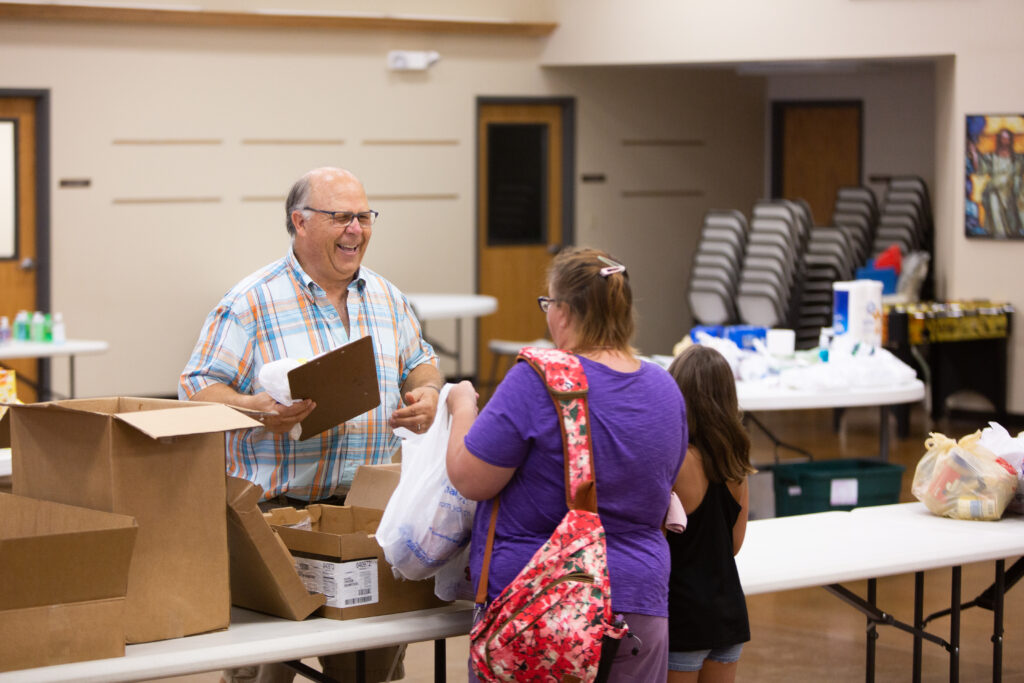
In Kansas, 40 percent of all households in rural areas are not earning enough to afford basic expenses in the county where they live. Families struggle to feed their families, afford rent and pay their bills. To help alleviate this concern, Catholic Charities of Northeast Kansas is expanding services in the 15 rural communities throughout the Archdiocese where the agency does not have a physical presence.
The new Rural Family Support Services program reflects the growing scope of assistance now available. Previously, services offered in rural counties were delivered exclusively through the Resource Bus and limited to food and direct financial assistance for rent and utilities. Over the past few years, the need has grown significantly. Last fiscal year alone, over 3,600 individuals received food, housing, utility, clothing assistance and hygiene items via the Resource Bus. The bus has also become an entry point for connecting those in need with other resources and referrals.
“Our wraparound services, including Financial Education, Workforce Development and refugee and La Luz Immigration Clinic services, have been provided at an ad hoc capacity to our rural neighbors,” said Amelia Reyes, Chief Program Officer. “We have now adapted and grown our ability to deliver more of our services by streamlining case management, providing it remotely via virtual meetings or over the phone,” she added.
Distance and infrastructure challenges are some of the biggest barriers for rural families interested in accessing our services. “Many neighbors must drive long distances just to access groceries or essentials,” shared Josh Taff, Family Support & Rural Services Manager. “There are many people in poverty and they need more help to become self-sufficient. Expanding our services will help us address any gaps and increase community impact,” he noted.
Reyes also explained that rural areas often lack dedicated funding streams, and with dispersed populations, it is harder for residents to learn about available assistance. “Catholic Charities relies heavily on partnerships with schools, churches and libraries to spread the word and ensure families know when and where our services are available,” she added.
With our new programming, more families will efficiently be served across all 21 counties, regardless of location. This program transition is happening in real-time, so the model will continue to adapt to serve the needs of our rural communities.